The iReady Diagnostic is a powerful assessment tool used in many schools to measure student progress in reading and math. For both 7th and 8th graders, it helps identify strengths and areas for growth, allowing teachers and students to focus on specific skills. Understanding what is a good iReady Diagnostic Score for 8th Grade is important for students, parents, and educators alike.
Understanding the iReady Diagnostic Score
The iReady Diagnostic provides a scaled score rather than a percentage or letter grade. These scores range from around 100 to 800 and are designed to indicate a student’s grade-level proficiency in math or reading. A score aligned with grade-level expectations is considered “on or above grade level,” while a lower score may indicate the need for extra support.
Each student’s score is also broken down into placement levels, which typically include:
- Mid or Above Grade Level
- Early On Grade Level
- One Grade Level Below
- Two or More Grade Levels Below
Average iReady Scores for 7th Grade
For 7th grade students, a good iReady Diagnostic score typically falls within the range that indicates they are performing at or above grade level. While the exact cut-off may vary slightly based on district norms and updates to the test, general ranges are:
- Reading: A good iReady score for 7th grade reading is usually around 580 to 615.
- Math: A good math score for 7th graders is typically between 585 and 620.
Students scoring above 615 in reading or 620 in math may be performing at the 8th-grade level or beyond, while scores below 580 might show that a student is still working on foundational skills from earlier grades.
Average iReady Scores for 8th Grade
For 8th grade students, expectations are slightly higher. Here’s a general idea of what to look for:
- Reading: A good iReady score for 8th grade reading is typically 600 to 640.
- Math: A good score in 8th-grade math generally falls between 610 and 645.
Again, scores above these ranges may show advanced proficiency, while scores below may suggest the student is still catching up.
What Influences a “Good” Score?
It’s important to remember that a “good” iReady score isn’t just about the number. Several factors come into play:
- Grade Level Expectations: What’s considered “good” depends on what students should know by that point in the year.
- Time of Year: Scores will naturally vary between fall, winter, and spring assessments. Students are expected to show growth with each test.
- Student Effort: Motivation and focus during the test can significantly affect the outcome.
- Instructional Support: Access to high-quality instruction and practice tools can help boost scores over time.
What If My Child’s Score is Below Grade Level?
A score below grade level isn’t the end of the world—it’s a starting point for growth. The iReady system offers personalized learning paths that adapt to each student’s specific needs. Teachers also use the data to tailor instruction and provide targeted interventions.
Here are a few things parents and students can do:
- Review Skill Reports: Check which skills need attention and practice those at home or with a tutor.
- Set Goals: Talk with your teacher to set realistic growth goals for the next assessment period.
- Stay Consistent: Encourage regular learning habits and positive reinforcement.
How to Track Progress with iReady
The real value of iReady lies in its ability to show growth over time. A student who starts the year one grade level below but ends on grade level has made significant progress—even if their score doesn’t seem “high.”
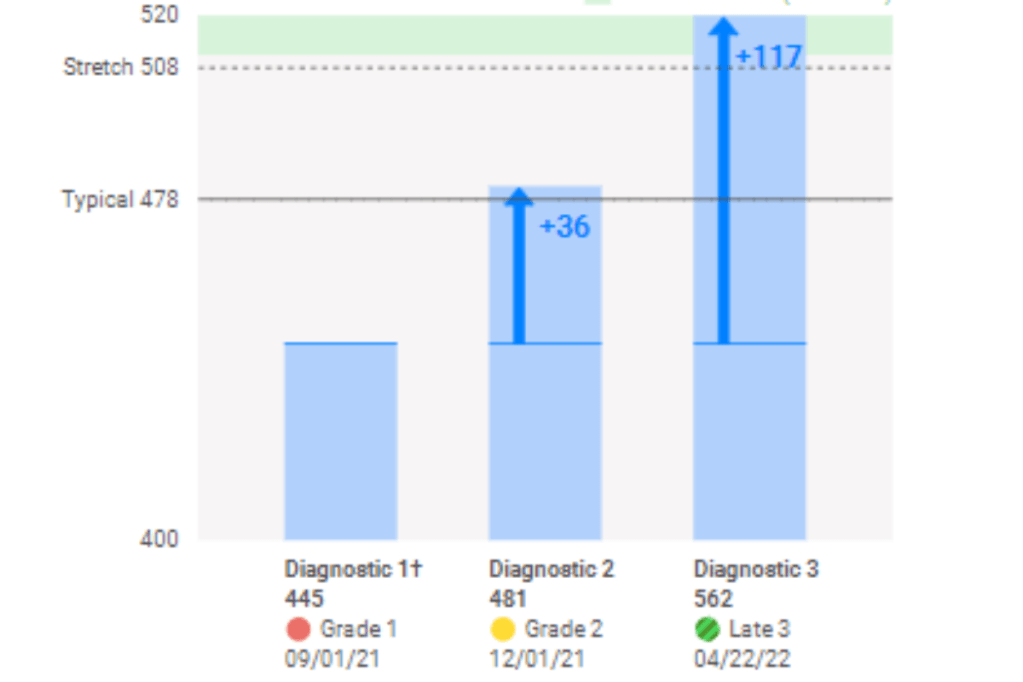
Growth is typically measured in terms of “stretch growth” and “typical growth.” Meeting or exceeding these targets is another way to define success with iReady, especially when scores improve from one diagnostic to the next.
Final Thoughts
A good iReady Diagnostic score for 7th and 8th grade students generally means they are meeting or exceeding grade-level expectations. However, the most important takeaway is progress. Whether a student starts behind or ahead, the goal is continuous growth and targeted learning.
Parents and teachers can work together to use the iReady data to support student achievement and build confidence in both reading and math. With consistent effort and the right tools, students can use their diagnostic results as a guide to success throughout the school year.
 What is a Good iReady Diagnostic Score for 7th and 8th Grade